 Dịch
Dịch


By Ling-Yen Liao
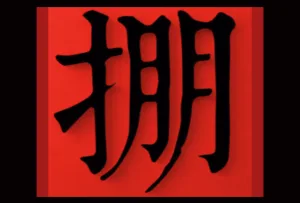
Ever since I started learning tai chi chuan, I’ve been wondering about the Chinese words in the Grasping Sparrow’s Tail sequence: Ward Off, Rollback, Press, and Push. These are four movements whose importance the tai chi classics repeatedly emphasize. I am particularly interested in “Ward Off” because, as many tai chi practitioners know, the Ward Off energy (peng jin) is the mother of all energies.
掤勁是萬勁之母。
Ward Off energy is the mother of all energies.
I speak Chinese, so you might be surprised that it took me a long time to find the word 掤 (“Ward Off”) in the Chinese dictionary, let alone type it. Why? Because 掤 is not properly pronounced as “péng,” but as “bīng.” Though Chinese can be typed through multiple input methods, one of the most common relies on pronunciation, so if you can’t pronounce it, you can’t type it.
掤,覆矢也。箭筒蓋。
The dictionary definition of Ward Off 掤 is: a cover for arrows, a quiver.
Before you wonder whether péng feels like a quiver, Professor Cheng Man-Ching already warned us about it. In his book Cheng Tzu’s Thirteen Treatises on T’ai Chi Ch’uan, Professor Cheng advises not to rely on the dictionary meanings of special tai chi words. Clearly, Professor Cheng didn’t think that péng means a quiver.
掤… 此為拳術家之專用術語。與說文解字有所不同。不可牽涉。
Ward Off (péng)… is special jargon used by martial artists and does not correspond with dictionary definitions.
(Adapted from Zheng, Manqing. Cheng Man-chʻing’s Advanced Tʻai-chi Form Instructions)
That said, the question of which written character was originally intended to indicate Ward Off is worth examining. There is another character, indeed pronounced as péng: 弸. Both characters have two components, the left side and the right side. Both characters share the right-side component 朋, pronounced péng. The difference between these two characters is that the left part of 掤 is a hand radical(扌), and the left part of 弸 is a bow radical(弓).
弸,弓彊貌。
The dictionary definition of 弸 is: a bow stretched to its fullest.
Isn’t it interesting that in English, we say “Ward Off” and move on? The original word is Chinese, yet we still cannot be certain which character is correct: 掤 or 弸? A hand, or a bow?
I find the bow interpretation compelling. I am not a linguist or historian—just a tai chi practitioner who speaks Chinese—but here is my reasoning:
Copying errors are very common in Chinese characters, while sounds are not so easily lost. That is why posture names vary across different tai chi styles, while phonetic (sound) traces remain. The situation is complicated by China’s many dialects, and some sounds deviate more than others. However, péng and bīng sound very different from each other. In contrast, going from 弸 to 掤 is very understandable. If 弸 (péng) were miscopied as 掤 (bīng), and the copyist didn’t recognize 掤, they would default to pronouncing the familiar component 朋, which is read as péng. That may help explain why martial artists continued pronouncing 掤 as “péng,” despite the dictionary pronunciation “bīng.” Although all four characters in the Grasping Sparrow’s Tail sequence share a hand radical, only Ward Off carries a pronunciation that doesn’t match its written form.
Whether or not 掤 was a copying error, the more interesting question may be which character better reflects tai chi principles.
I’ve learned that the body itself becomes a bow in many tai chi postures. Indeed, we have a posture named “Bend Bow Shoot Tiger.” Dropping the tailbone stabilizes your posture and makes you a bow.
蓄勁如張弓,發勁如放箭。
Classic saying: store up the jin (internal strength) like drawing a bow; release the jin like releasing the arrow.
(Adapted from Lo et al., The Essence of T’ai Chi Ch’uan)
In his book Like A Long River, Wolfe Lowenthal shared a quote from William C. C. Chen:
“In releasing force, you absolutely do not use strength. You release your force like shooting an arrow.”
“But,” he was asked, “in shooting an arrow doesn’t it require strength to draw the bow?”
“You let the opponent draw the bow.”
We may never know for certain whether 掤 was a copying error, and maybe it doesn’t matter. In tai chi, the emphasis is ultimately not on the posture names themselves but the principles. As students committed to this journey, perhaps the best answer is to let our practice itself tell us whether Ward Off is a hand or a bow.
References
- 掤 in dictionary https://dict.revised.moe.edu.tw/dictView.jsp?ID=532
- 弸 in dictionary https://dict.revised.moe.edu.tw/dictView.jsp?ID=299
- Man-ch’ing á, Cheng. Cheng Tzu’s Thirteen Treatises on T’ai Chi Ch’uan. Translated by Benjamin Pang Jeng Lo and Martin Inn, North Atlantic Books, 2008.
- Zheng, Manqing. Cheng Man-chʻing’s Advanced Tʻai-chi Form Instructions: With Selected Writings on Meditation, the I Ching, Medicine, and the Arts. Sweet Chʻi Press, 1985.
- Lo, Benjamin Pang Jeng, et al., translators. The Essence of T’ai Chi Ch’uan: The Literary Tradition. IRI Press, 2008.
- Lowenthal, Wolfe. Like a Long River: Some Tai Chi Thoughts. Long River Tai Chi Press, 2005.
Discover the many benefits of tai chi.
Find your tai chi or qigong path with the Tai Chi Foundation (TCF). TCF provides live online courses, allowing you to engage in guided sessions in the comfort of your home. These virtual classes offer unique opportunities to connect with experienced instructors, ensuring that you receive personalized guidance and feedback. Additionally, the Tai Chi Foundation offers Teachable on-demand classes, providing a flexible and accessible way to learn at your own pace. Whether you’re a beginner or an experienced practitioner, these online resources present a wealth of knowledge to enhance your tai chi journey. For those seeking a more hands-on experience, be sure to check out the in-person course offerings of TCF’s affiliated local schools.
Be sure to check out the TCF Shop, where you can find our stylish signature tai chi t-shirts!
Stay inspired by keeping up on all our classes, retreats, and events. Sign up here for the TCF newsletter.
TCF is a not-for-profit educational organization that promotes, funds, and teaches programs that enable people to learn tai chi chuan and embody its principles.
Copyright 2026 Tai Chi Foundation
So very good and interesting, Ling. THANKS! Peter
Reading again. I think “bow” makes the most sense. Unless maybe you say, “your hand or arm is LIKE a bow.” It does have that shape in the form. Also interesting is that you will frequently see our 70/30 stance called the “bow stance” in books from other masters and schools. There is taiji archery, but that’s a different topic about which I know almost nothing.